
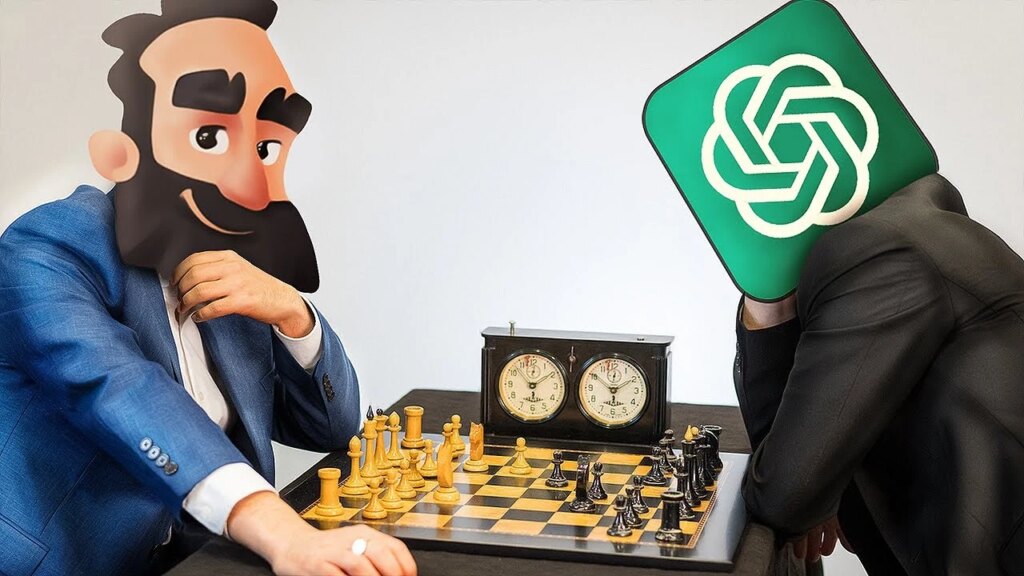
Most players ask the question in the wrong way. They ask whether bots are good or bad for chess improvement, as if the answer must be absolute. A grandmaster would frame it differently. The useful question is whether bot games improve the part of chess the player is actually lacking. For some players, the answer is clearly yes. For others, bot games become a comfortable habit that looks like training but does not solve the real problem.
Playing against bots can make a player better, but only when the games are used with purpose. A bot is not a substitute for tournament pressure, human unpredictability, or serious post-game analysis. What it does offer is something very valuable – repeatable resistance, stable playing conditions, and a clean way to test decisions without the distractions that often come with casual online games. That matters more than many players realize.
In practical online chess, people often improve slowly because their feedback is unreliable. They make a weak move, the human opponent misses the punishment, and the bad habit survives. Against a bot, especially one set at the right level, weak decisions are often exposed more consistently. That is one reason structured platforms such as Endgame AI have become useful for modern players. The value is not only in playing against technology. It is in using those games to understand which decisions keep failing and why.
Even at the highest levels, progress still depends on this kind of honesty. Public debate around players such as Hans Niemann tends to focus on results, controversy, and headlines, but the basic truth of improvement does not change. Strong players grow by exposing weaknesses, not by hiding from them. Bot training can help with that, provided it is used as a tool rather than a refuge.
Bots Can Improve Decision-Making More Than Many Human Games
One of the biggest practical benefits of bot games is consistency. Human opponents below master level are often erratic. They can punish one mistake brilliantly and ignore the next one completely. That makes learning harder because the feedback is noisy. A player may win while making poor decisions all game, then assume the decisions were acceptable. In training terms, that is dangerous.
A bot does not solve every instructional problem, but it does remove some of that noise. It is less likely to miss the same kind of weakness over and over. If the player keeps pushing pawns around the king too early, misjudging exchanges, or drifting into bad endgames, the punishment tends to arrive more reliably. That makes the lesson clearer. A grandmaster usually values clarity more than comfort. A move that looks active but leaves a long-term weakness should be punished. Bot games often do that better than casual human games.
This is especially useful for players who need to improve judgment rather than just tactics. Many mistakes in chess are not direct blunders. They are slightly weak choices that create problems later. Human opponents often fail to convert those positions. Bots usually handle them with more consistency. That helps the player see the true cost of a loose pawn move, a passive piece, or an unnecessary simplification.
The result is that bot games can train decision-making in a serious way when the player pays attention to the structure of the game rather than only the result. Winning or losing matters less than understanding whether the position was handled well.
Bots Are Best for Repetition, Pattern Work, and Controlled Practice
A human opponent is unpredictable, and that is useful. But unpredictability is not always ideal for targeted training. If a player wants to work specifically on isolated pawn positions, kingside attacks, technical endgames, or playing against a space advantage, human games may not produce enough relevant examples in a short period. Bots are helpful here because they allow repetition under cleaner conditions.
That repetition is one of the strongest ways to improve. A player rarely learns a strategic or technical lesson from one example alone. He learns it after seeing the same problem in several related forms. Bots can create that environment much more easily than random matchmaking. The player can choose a structure, repeat it, review it, and test the correction again in the next session.
For practical improvement, this matters a great deal. A player who repeatedly mishandles rook endings against a bot can focus on that exact weakness until the decisions improve. A player who collapses after opposite-side castling can revisit those positions without waiting a week for the theme to appear naturally. This is efficient training, especially for adults with limited time.
A useful bot session usually has only a few real goals:
- test one type of position or one recurring weakness
- review whether the same mistake appeared again under similar conditions
That is enough. The value comes from focus, not from trying to make the bot do everything.
Bots Do Not Replace Human Competition, Pressure, or Practical Chaos
This is where many players misuse them. Bot games are clean, convenient, and emotionally easier than real competition. That can become a problem. A player may start preferring bots simply because bots do not create the same tension as rating games, tournament rounds, or difficult human opponents. Once that happens, the training loses an important element of real chess – discomfort.
A human opponent creates uncertainty in a different way. Time pressure feels different. Psychological pressure feels different. A strange move can provoke overreaction. A lost position may still be defended resourcefully. These features are part of practical chess strength, and bots do not reproduce them perfectly. A player who only trains against bots may become technically cleaner and still remain too fragile in real competition.
From a grandmaster’s perspective, that is the main limitation. Bot games can improve technique, discipline, and evaluation, but they cannot fully train the competitive nerves required in live play. They are strongest when combined with real games, not when used as a replacement for them.
This is also why honest review matters so much. If the player finishes a bot game and immediately starts another one, much of the educational value disappears. The benefit comes when the player identifies where the thinking broke down and carries that lesson into later human games. Players who want a smoother loop between play and review often visit the site because the training becomes more coherent when those parts stay connected.
The Right Way to Use Bot Games for Real Improvement
A player improves from bots when the games are chosen well, the level is appropriate, and the review is serious. The bot should be strong enough to punish recurring weaknesses, but not so strong that every game becomes a hopeless exercise in survival. The goal is not to be crushed by perfection. The goal is to expose specific weaknesses clearly enough that they can be corrected.
The strongest method is to treat bot games as laboratory work. The player chooses a training theme, plays with full concentration, and then reviews the game in plain language before consulting any analysis. What was the plan. Where did the position become uncomfortable. Which move changed the nature of the game. This kind of review is what turns a bot game into useful training instead of mechanical repetition.
The player should also be careful about frequency. Too many bot games can create a false sense of order. Real chess remains messy, and improvement must eventually survive that mess. The ideal balance is usually simple – some bot work for targeted repetition and decision-making, some human games for pressure and unpredictability, and regular review to connect both.
So can playing against bots make you better at chess. Yes, clearly, but only when the player knows what the bots are for. They are not there to replace competition or to provide easy volume. They are there to expose repeatable errors, sharpen decisions in stable conditions, and make training more exact. Used that way, they are not a shortcut. They are a very practical part of serious improvement.